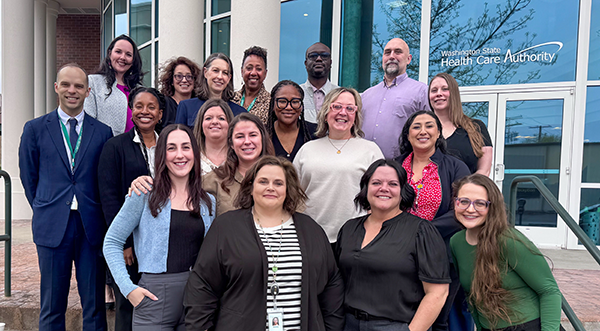
The SUD Prevention and MH Promotion Section is proud to have participated in a four-day programmatic site visit conducted by the Substance Abuse and Mental Health Services Administration (SAMHSA) on April 20-23, 2026, reviewing SUD prevention services. The visit was an excellent opportunity to highlight the work the Section leads in the state in cooperation with Tribes, state partner agencies, universities, counties, Educational Service Districts (ESDs) and schools, communities, other entities and prevention professionals.
The site visit was primarily held to review compliance of SUD prevention initiatives but beyond compliance, it was an opportunity to showcase the exceptional work happening throughout Washington. We are happy to report that SAMSHA was pleased with Washington’s prevention infrastructure and services. As part of the visit, SAMHSA highlighted many key successes such as the work each of you do in communities and schools as well as our statewide collaboration including through the State Policy Enhancement (SPE) Consortium and the statewide Strategic Plan as well as our workforce development efforts including our conferences, training, and fellowship program.
SAMHSA Project Officers and the site visit coordination team visited HCA, Tribes, and communities across the four days. We thank SAMHSA for being such excellent partners, and for empowering the Washington state prevention system with funding, technical assistance, and support each year. SAMHSA’s leadership has empowered the nation with life-changing services and we’re immensely grateful for their work.
The event featured cross-agency collaboration, where state, Tribal, and local partners demonstrated significant involvement in the state prevention system. We extend our highest appreciation to those who participated, including:
- HCA’s Office of Tribal Affairs, who shared about tribal partner initiatives and the great work happening across the state,
- Colville Tribe, who welcomed SAMHSA and DBHR for a sub-recipient site visit, and exemplified local efforts in the community,
- Educational Service District 113, who also welcomed SAMHSA and DBHR for a sub-recipient site visit, further demonstrating local efforts,
- The Concrete Coalition, who were joined by youth from their prevention clubs to highlight their local efforts for a sub-recipient site visit,
- The Advisory Workgroup for CPWI and CBO Prevention Services, who welcomed SAMHSA to their monthly meeting and demonstrated how collaboration advances the work and keeps a pulse on provider needs,
- Washington State Liquor and Cannabis Board, who spoke towards policy initiatives and landscape of substance use trends and with Synar including the coordination and implementation of compliance checks,
- Washington State Department of Health, who supported the efforts regarding work occurring within the State Prevention Enhancement (SPE) Policy Consortium and with Synar,
- University of Washington and Washington State University, who attended the visit to represent research and evaluation efforts, and programs to support youth and young adult prevention,
- HCA’s Operations team, who assisted in coordinating across several divisions,
- HCA leadership who supported the visit and participated throughout, including:
- Ryan Moran, HCA Director
- Teesha Kirschbaum, DBHR Assistant Director
- Aren Spark, Tribal Affairs Administrator
- Leah Coberly, DBHR Deputy Division Director
- And finally, to each of YOU for your daily efforts. While you may not have been directly part of the site visit, the work you are leading in the communities and schools was seen in many ways —whether through the data shared or the stories told. THANK YOU!
It was inspiring to be able to share about the initiatives and efforts across the state , from state projects to local prevention programs, highlighting what true teamwork can achieve. This is more than just amazing work — it’s life-saving work. The site visit reminded us that at the heart of prevention is collaboration and community, which was on full display.
To all our partners and providers, your efforts each and every day are what make Washington’s prevention system successful.